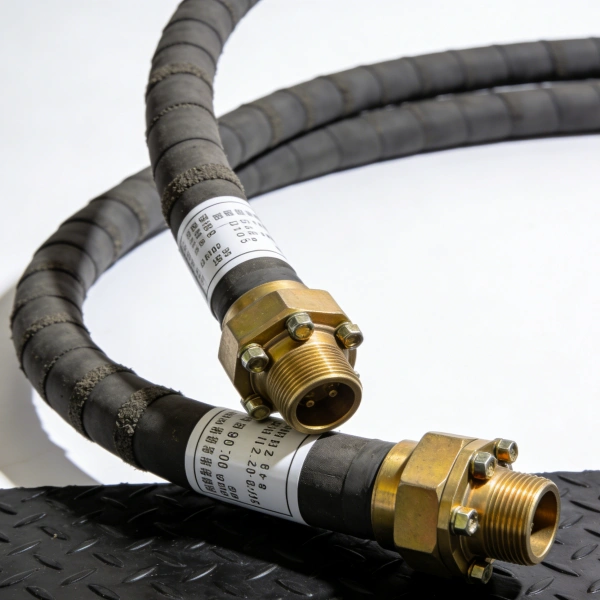
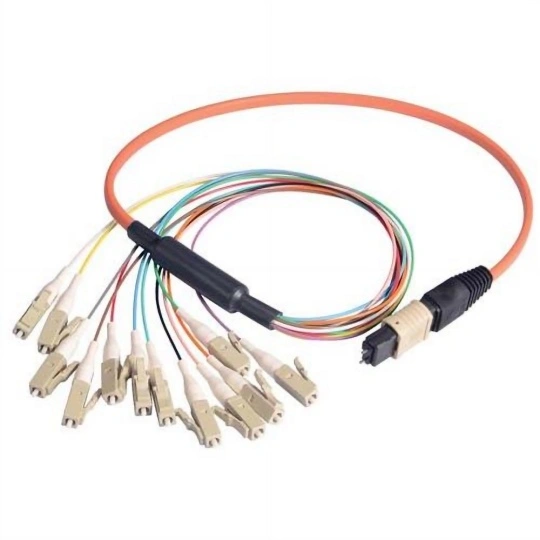
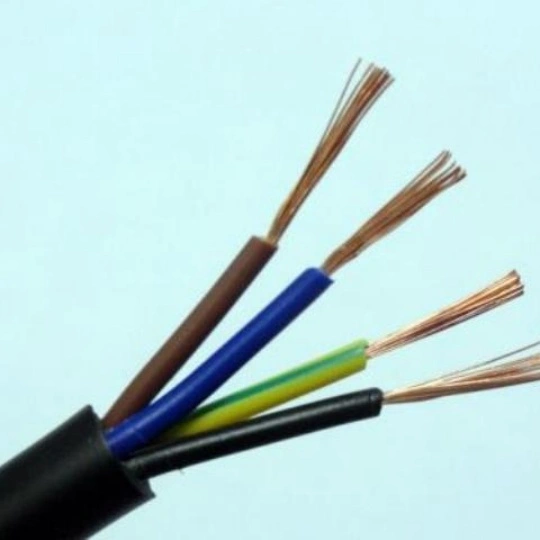
In industries where failure is not an option, High Voltage Industrial Cable Assemblies with Wide Temperature Range for Extreme Scenariosare the critical links that keep power and signals flowing. These assemblies are purpose-built to operate reliably in punishing conditions, from the heat of a desert oil platform to the sub-zero chill of an arctic research station.
This guide explores the engineering behind these assemblies, their key performance parameters, and how to select the right one for your most demanding applications.
🎯 What Are High Voltage Industrial Cable Assemblies?
High voltage (HV) industrial cable assemblies are complete, engineered cable systems. They are designed to safely and reliably transmit high-voltage power or signals in industrial settings where standard cables would fail.
Core Components:
- Conductor:Typically stranded copper or copper alloy.
- Insulation System:Specially formulated to withstand high voltage stress and environmental factors.
- Shielding:Metallic braid, foil, or both, to control electromagnetic interference (EMI) and manage partial discharge.
- Connector:A high-voltage-rated interface (e.g., RADOX®, PowerTube, HIVONEX) that ensures a secure, repeatable connection.
- Protective Jacket:A robust outer layer (e.g., rubber, polyurethane) for mechanical, chemical, and weather protection.
These assemblies are used wherever system voltages exceed standard “low-voltage” ranges, such as in industrial drives, EV infrastructure, renewable energy systems, rail traction, power distribution, and test equipment.
🌡️ Why a Wide Temperature Range is Non-Negotiable
Standard cables often fail prematurely in harsh environments due to:
- Insulation Degradation:Becomes brittle and cracks in extreme cold or softens and deforms in high heat.
- Increased Electrical Stress:Thermal expansion and contraction can alter creepage and clearance distances, increasing the risk of partial discharge or arcing.
- Connector & Seal Failure:Plastic parts can crack, and elastomeric seals can harden or lose elasticity, compromising the assembly’s integrity.
Wide-temperature-range HV cable assembliesare engineered to maintain performance across a broad spectrum, such as -40 °C to +125 °Cor even -55 °C to +150 °C. This ensures reliable operation in diverse and unpredictable conditions, from engine compartments to outdoor solar farms.
🔬 Key Design Elements for Extreme Environments
1. Conductor & Insulation
- Conductors:High-purity, stranded copper provides the necessary current-carrying capacity and flexibility. Stranding also helps control skin effect at high frequencies.
- Insulation Materials:
- XLPE (Cross-linked Polyethylene):Offers a good balance of voltage rating, thermal performance, and flexibility. Common in EV and energy storage cables with ranges like -40 °C to +125 °C.
- Fluoropolymers (e.g., PTFE, FEP, PFA):Excel in high-temperature environments, with service temperatures up to +200 °Cor +260 °C. Ideal for aerospace and industrial ovens.
- Special Rubbers (e.g., Silicone, EPDM):Provide excellent flexibility and broad temperature ranges, suitable for mobile equipment and outdoor use.
2. Shielding & Jacketing
- Shielding:A continuous shield (braid, foil, or both) tied to a defined ground point is vital for EMI control and minimizing partial discharge in HV systems.
- Jacket Materials:Must be chosen for the specific environment. Options include:
- Oil & Fuel Resistant:For automotive and industrial machinery.
- UV & Weather Resistant:For outdoor and solar applications.
- Flame Retardant & Low-Smoke:For enclosed industrial spaces.
- Chemical Resistant:For chemical plants and refineries.
3. Connector & Termination
Connectors are the most vulnerable point. For extreme scenarios, look for:
- Rated Voltage & Current:Ensure the connector’s rating exceeds the system’s requirements, with ample margin for derating.
- Wide Temperature Range:The connector body and contacts must be validated for the full operating temperature range.
- Robust Mechanical Design:Features like threaded couplings and overmolding provide strain relief and resistance to vibration.
- Sealing:High IP-rated connectors (e.g., IP67) with sealed interfaces prevent moisture and dust ingress, which can lead to tracking and failure.
4. Voltage Withstand & Partial Discharge
- Voltage Withstand (Hi-Pot):Assemblies are factory-tested at voltages significantly higher than their operating voltage (e.g., 2x to 5x) to confirm insulation integrity.
- Partial Discharge (PD) Testing:This critical test identifies microscopic voids or defects in the insulation that could lead to long-term failure. Reputable manufacturers perform PD testing on every HV assembly.
🏭 Applications & Real-World Examples
1. Electric Vehicles (EV) & Battery Systems
- Environment:High currents, battery thermal cycling (-30 °C to +60 °C+), vibration, and exposure to oils and coolants.
- Solution:XLPE-insulated HV cableswith -40 °C to +125 °Cratings and shielded connectors. These are often custom-length “pigtails” for battery packs and charging systems.
2. Renewable Energy (Solar, Wind)
- Environment:Exposure to intense UV, temperature swings, moisture, and sometimes salt spray or ice.
- Solution:UV-stable, weather-resistant jackets with wide temperature rangesand robust shielding for reliable power transmission from panels or turbines to inverters.
3. Industrial Automation & Robotics
- Environment:Constant flexing, high vibration, and exposure to coolants, cutting fluids, and dust.
- Solution:Flexible HV cable assemblies with oil-resistantand abrasion-resistantjackets. Connectors with 360° shieldingand IP67/IP68ratings are common.
4. Aerospace, Defense & Space
- Environment:Extreme temperatures, vacuum, radiation, and high reliability demands.
- Solution:Specialized HV cables like RADOX®, qualified for -40 °C to +150 °Cwith short-term peaks up to +250 °C. These are used in aircraft, spacecraft, and military systems where failure is not an option.
5. Oil, Gas & Mining
- Environment:Explosive atmospheres, corrosive chemicals, high humidity, and wide temperature swings.
- Solution:Hazard-rated cable assembliesbuilt to standards like IP67/IP68. These use materials resistant to oil, fuel, and chemicals, and are designed for long-term reliability in hazardous locations.
✅ How to Specify the Right Assembly
- Define Operating Conditions:Document the minimum/maximum ambient temperature, presence of moisture, chemicals, UV, vibration, and mechanical stress.
- Determine Electrical Requirements:Specify the continuous operating voltage, peak voltage, maximum current, and frequency.
- Select Core Components:Choose the conductor size, insulation type (XLPE, fluoropolymer, rubber), and shielding configuration based on the above factors.
- Choose the Right Connector:Select a connector family rated for your voltage, current, and temperature. Ensure it has the necessary IP rating and sealing for your environment.
- Evaluate Environmental Protection:Specify the required ingress protection (IP rating), chemical resistance, and flammability (e.g., UL, IEC, ADR) standards.
- Partner with an Experienced Manufacturer:Work with a supplier who offers design collaboration, prototyping, and rigorous quality testing (Hi-Pot, PD, etc.).
💡 Conclusion
In high-stakes industrial applications, a standard cable is a point of failure waiting to happen. High Voltage Industrial Cable Assemblies with Wide Temperature Range for Extreme Scenariosare engineered to be the dependable backbone of your system. By understanding the interplay of materials, design, and application demands, you can select assemblies that ensure safety, maximize uptime, and deliver long-term value.