Industrial Cable Assemblies-Industrial Cable Assemblies factory
In the complex and harsh environment of industrial operations, industrial cables serve as the “nervous system” and “blood vessels” of equipment, transmitting power, signals, and data. However, they are constantly exposed to various mechanical stresses during installation, operation, and maintenance. Mechanical stress refers to the force exerted on the cable that causes deformation or damage, such as tension, bending, impact, and abrasion. The resistance of industrial cables to these stresses is not just a technical parameter but a critical factor that directly affects the safety, efficiency, and cost-effectiveness of industrial systems. This article will deeply explore why this resistance is so important and how it impacts industrial production.
Before understanding the importance of resistance to mechanical stress, it is necessary to clarify the common forms of mechanical stress that industrial cables face:
Safety is the top priority in industrial production. If industrial cables lack sufficient resistance to mechanical stress, damage such as insulation breakdown and conductor breakage is likely to occur. Insulation breakdown can lead to short circuits, which may cause fires, electric shocks, and other serious safety accidents, endangering the lives of workers and the safety of production facilities. For example, in petrochemical plants where flammable and explosive materials are present, a short circuit caused by cable damage due to mechanical stress could trigger a catastrophic explosion. Therefore, strong mechanical stress resistance is the first line of defense to prevent safety hazards.
Industrial systems rely on cables to transmit power and signals. Unstable cable performance due to mechanical stress will directly affect the normal operation of the entire system. For example, in a precision manufacturing workshop, if the signal cable is damaged by bending stress, the control signal of the equipment will be distorted, leading to product quality defects or equipment shutdown. In power transmission systems, conductor breakage caused by tension stress will result in power outages, affecting the continuous production of the enterprise. According to statistics, more than 30% of industrial equipment failures are related to cable damage caused by insufficient mechanical stress resistance. Thus, improving the cable’s mechanical stress resistance is crucial to ensuring the stability and continuity of industrial production.
Cables that are not resistant to mechanical stress need to be replaced and maintained frequently. The replacement process not only requires the purchase of new cables but also involves stopping production, which brings huge economic losses to the enterprise. For example, a large-scale steel plant needs to shut down the production line for several hours to replace a damaged power cable, resulting in a loss of hundreds of thousands of yuan in output value. In contrast, cables with strong mechanical stress resistance have a longer service life, reducing the frequency of replacement and maintenance. This not only saves maintenance costs but also avoids production downtime caused by cable failures, improving the overall production efficiency of the enterprise.
Most industries have strict standards and regulations for the performance of industrial cables, including requirements for mechanical stress resistance. For example, the International Electrotechnical Commission (IEC) and the National Electrical Manufacturers Association (NEMA) have formulated detailed standards for cable tensile strength, bending radius, and impact resistance. Enterprises must use cables that meet these standards to obtain production qualification and pass safety audits. If the cable’s mechanical stress resistance fails to meet the standards, the enterprise may face penalties such as fines and production suspension. Therefore, choosing cables with excellent mechanical stress resistance is an important measure for enterprises to comply with regulations.
To enhance the mechanical stress resistance of industrial cables, manufacturers usually adopt the following key technologies:
In summary, the resistance of industrial cables to mechanical stress is a vital factor that affects industrial safety, production stability, and economic benefits. Enterprises must attach great importance to this performance index when selecting industrial cables and choose products with excellent mechanical stress resistance.
FRS brand factory has always been committed to producing high-quality industrial cables with strong mechanical stress resistance. With years of technical accumulation and strict quality control, FRS cables adopt high-quality materials and optimized structural designs to effectively withstand tension, bending, impact, and abrasion stresses in industrial environments. Whether in automated production lines, petrochemical plants, or heavy manufacturing workshops, FRS cables can provide stable and reliable performance, ensuring the safe and efficient operation of your industrial system. Choose FRS, and let your industrial production be more secure and worry-free.
Our factory offers high-quality products at competitive prices
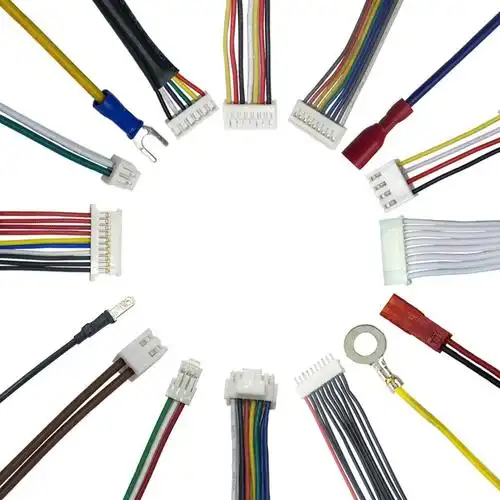
Industrial Cable Assembly Product Summary Material & Safety Utilizes premium raw materials and globally recognized components (e.g., ABB, TE Connectivity) ensuring high reliability and safety to prevent risks like fire and e.
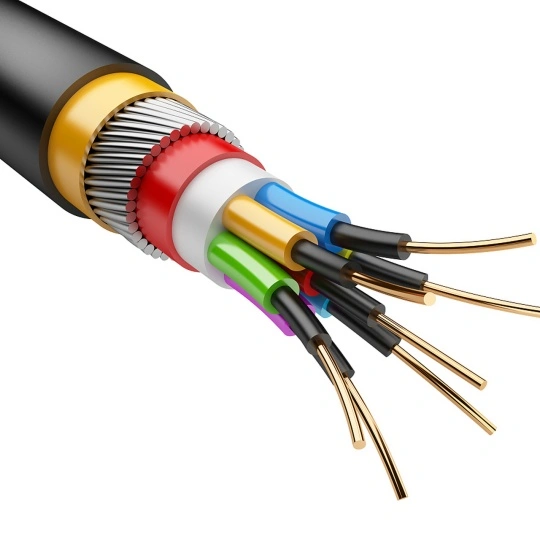
In today’s technology-driven world, maintaining uninterrupted signal integrity is critical for industrial, commercial, and residential applications. The Shielded Cable Core is engineered to deliver superior electromagnetic interference .
Feel free to reach out to us for any inquiries or orders.