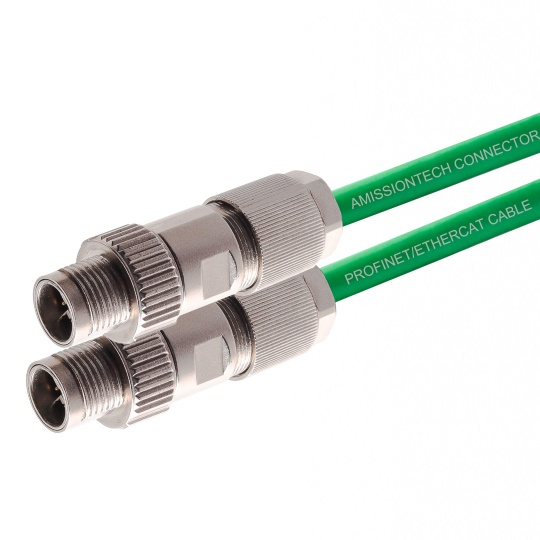
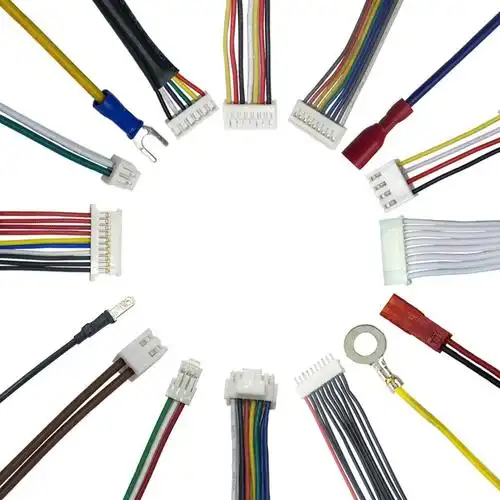
Choosing the right cable assembly for your industrial application – whether grabbing one off-the-shelf or designing a bespoke solution – is crucial for performance, reliability, and cost-efficiency. Both pre-made and custom assemblies have their place; the best choice depends entirely on your specific needs.
Here’s a practical guide to help you decide:
Pre-Made (Off-the-Shelf) Cable Assemblies: Ideal When…
- Standard Requirements Fit: Your application uses common connector types (like M12, M8, D-Sub, RJ45), standard wire gauges, and standard lengths. Pre-made solutions cover a vast majority of standard industrial communication and power needs.
- Urgency is Key: You need parts quickly. Pre-made cables are stocked for immediate shipment, minimizing machine downtime during repairs or new installations.
- Budget is Tight: Generally, pre-made assemblies are less expensive upfront due to mass production. They have no development or tooling costs.
- Simple Replacement: You’re replacing an existing, standard cable assembly and need an exact match quickly.
- Prototyping/Testing: Ideal for initial system prototypes or bench testing where exact final requirements might still be fluid.
Custom Cable Assemblies: Essential When…
- Unique Configurations: Your application requires specific connector combinations, specialized pinouts/wiring, hybrid cables (power + signal + data in one jacket), or integration with proprietary equipment that standard cables don’t support.
- Exacting Lengths or Routing: You need a precise cable length to eliminate slack or excess bulk, require specific bend radii for tight spaces, or need integrated mounting features (clips, brackets).
- Demanding Environmental Needs: Operating in extreme environments (high temps, chemicals, constant flexing, abrasion, moisture, EMI/RFI interference) demands custom materials: specialized jacketing (PUR, TPE, FEP), shielding, and conductors built for durability.
- Performance Specifications: Your application demands strict electrical specifications (impedance control, high voltage, specific current ratings) or agency certifications (UL, CE, CSA, ATEX) beyond standard offerings.
- Volume & Long-Term Reliability: While the initial cost per unit is higher (due to development, tooling), large-volume production runs often make custom assemblies cost-effective over time. More importantly, a cable designed exactly for its purpose minimizes failures and maximizes the lifespan of your machinery.
- Streamlined Integration: Simplifying installation and reducing points of failure by consolidating multiple connections into one custom loom/harness saves time and increases overall system reliability.
Making the Practical Choice: Ask These Questions
- What’s the application environment? (Temp, chemicals, abrasion, flex cycles?)
- What electrical specs are non-negotiable? (Voltage, current, signal integrity, shielding?)
- What connectors are involved? Are they common or OEM-specific?
- What exact length is needed? Is routing severely constrained?
- How many units are needed? (One-off, small batch, high volume?)
- What’s the criticality? Can downtime be tolerated for repairs? Is failure expensive/unsafe?
- What’s the timeline? How fast are they needed?
Conclusion:
Don’t force a standard cable into an application demanding a custom solution. Conversely, don’t pay for custom engineering if a robust off-the-shelf cable meets every requirement perfectly.
- Pre-Made Wins: For speed, lower upfront cost on standard requirements, replacements, and prototyping.
- Custom Wins: For unique configurations, exacting lengths/routing, extreme environments, critical performance specifications, high-volume production, and maximizing long-term system reliability and efficiency.
Start by clearly defining your technical requirements and constraints. Then, realistically assess if standard offerings fulfill them. If the answer is no, investing in a custom industrial cable assembly designed for your exact needs is the practical and reliable path forward.