Industrial Cable Assemblies-Industrial Cable Assemblies factory
In the era of Industry 4.0, high-speed and reliable data transmission has become the lifeblood of industrial operations. From smart factories and automated production lines to critical infrastructure monitoring, industrial Ethernet cables serve as the physical backbone that connects sensors, controllers, robots, and servers. However, choosing the right industrial Ethernet cable for high-speed data transmission is not a one-size-fits-all task. Unlike commercial Ethernet cables, industrial-grade cables must withstand harsh environmental conditions, ensure minimal signal loss, and maintain stable performance under extreme temperatures, vibration, and electromagnetic interference (EMI). This comprehensive guide will walk you through the essential factors to consider when selecting industrial Ethernet cables for high-speed applications, helping you make an informed decision that aligns with your operational needs and long-term reliability goals.
The first step in choosing an industrial Ethernet cable is to align it with the specific Ethernet standard your system uses. High-speed data transmission in industrial settings typically relies on standards such as Gigabit Ethernet (1000BASE-T), 10 Gigabit Ethernet (10GBASE-T), and even emerging standards like 25GBASE-T or 100GBASE-T for ultra-high-speed applications. Each standard has distinct requirements for cable performance, including bandwidth, signal integrity, and twisted-pair configuration.
For example, Gigabit Ethernet (1000BASE-T) requires Category 5e (Cat5e) or higher cables, with Cat6 and Cat6a being the most common choices for industrial environments. Cat5e supports up to 1 Gbps at 100 meters, while Cat6 enhances performance with better crosstalk reduction and supports 1 Gbps at 100 meters or 10 Gbps at shorter distances (up to 55 meters). 10 Gigabit Ethernet (10GBASE-T), on the other hand, mandates Cat6a, Cat7, or Cat8 cables. Cat6a offers 10 Gbps transmission at 100 meters, making it ideal for industrial applications that demand higher bandwidth. Cat7 and Cat8 cables provide even greater performance, with Cat8 supporting up to 40 Gbps at 30 meters, suitable for short-distance, high-speed connections in dense industrial networks.
It’s crucial to note that using a cable below the required category for your standard will result in degraded performance, dropped packets, and unreliable data transmission. Therefore, always verify the Ethernet standard of your industrial equipment and select a cable that meets or exceeds its specifications.
Industrial environments are far more demanding than commercial or residential spaces, exposing cables to a range of harsh conditions. When selecting an industrial Ethernet cable for high-speed transmission, environmental resistance is a non-negotiable factor. Key environmental challenges to consider include temperature extremes, moisture, chemicals, vibration, and physical abrasion.
Industrial facilities such as manufacturing plants, refineries, and outdoor installations often experience wide temperature fluctuations. Standard commercial cables typically operate within a range of 0°C to 60°C, but industrial-grade cables should be rated for broader ranges. Look for cables that can withstand temperatures from -40°C to 85°C or higher for extreme cold or hot environments. For example, cables with a polyethylene (PE) or polyvinyl chloride (PVC) jacket may be suitable for moderate temperatures, while fluoropolymer (e.g., PTFE) jackets offer superior heat resistance for high-temperature applications.
Moisture, whether from humidity, water splashes, or submersion, can damage cables and cause signal degradation. Industrial Ethernet cables should have a water-resistant jacket, such as a polyethylene (PE) or thermoplastic elastomer (TPE) outer layer. For applications where cables may be submerged (e.g., wastewater treatment plants or marine environments), look for cables rated with an IP (Ingress Protection) rating of IP67 or higher. Additionally, some cables feature a water-blocking gel or tape under the jacket to prevent water infiltration into the conductor pairs.
Industrial settings often involve exposure to oils, solvents, acids, alkalis, and other chemicals that can deteriorate cable jackets and insulation. Cables with chemical-resistant materials like neoprene, polyurethane (PU), or PTFE jackets are ideal for such environments. For example, PU-jacketed cables are resistant to oils and abrasion, making them suitable for automotive manufacturing or food processing facilities where cleaning chemicals are used.
Machinery, pumps, and conveyors in industrial plants generate constant vibration, which can loosen cable connections or damage internal conductors over time. Industrial Ethernet cables should have a robust construction, including a stranded conductor design (instead of solid conductors) for flexibility and resistance to fatigue from vibration. Additionally, a braided shield or armor layer (e.g., steel or aluminum) can provide mechanical protection against impact and abrasion.
High-speed data transmission relies on maintaining signal integrity, which refers to the cable’s ability to carry a signal from the transmitter to the receiver without significant distortion. In industrial environments, signal integrity is threatened by electromagnetic interference (EMI), radio frequency interference (RFI), crosstalk, and impedance mismatch. To ensure reliable high-speed transmission, select cables with features that mitigate these issues.
Industrial facilities are filled with electrical equipment (e.g., motors, transformers, welding machines) that emit EMI, which can disrupt Ethernet signals. Shielded cables are essential to block this interference. There are several shielding options available, each offering different levels of protection:
Crosstalk is the unwanted transfer of signals between adjacent twisted pairs in a cable, which can cause data errors at high speeds. To minimize crosstalk, look for cables with tight twisted-pair configurations (more twists per meter) and separation elements (e.g., a plastic spline) that keep the pairs isolated. Higher category cables (e.g., Cat6a, Cat7) are designed with improved crosstalk performance compared to lower categories (e.g., Cat5e).
Impedance is the measure of a cable’s opposition to alternating current (AC) signals. Industrial Ethernet cables typically have an impedance of 100 ohms, which must match the impedance of the connected equipment (e.g., switches, routers, sensors). A mismatch in impedance can cause signal reflections, leading to data loss and reduced transmission distance. Ensure that the cable you choose has a consistent impedance rating to avoid these issues.
The physical construction of an industrial Ethernet cable affects its durability, flexibility, and ease of installation. For high-speed applications, the following construction features are important:
Solid conductors are made of a single piece of copper and offer better signal transmission over long distances, but they are rigid and prone to breaking if bent repeatedly. Stranded conductors consist of multiple small copper strands twisted together, providing greater flexibility and resistance to vibration and mechanical stress. In industrial environments where cables may need to be routed around machinery or moved during maintenance, stranded conductors are the preferred choice. However, for fixed, long-distance runs (e.g., between control cabinets), solid conductors can be used if flexibility is not a concern.
The outer jacket of the cable protects the internal components from environmental damage. As mentioned earlier, common jacket materials for industrial cables include PVC, PE, PU, and PTFE. PVC is cost-effective but has limited temperature and chemical resistance. PE offers good moisture resistance and is suitable for outdoor use. PU is highly resistant to abrasion, oils, and chemicals, making it ideal for harsh industrial settings. PTFE provides excellent high-temperature resistance but is more expensive.
For applications where cables are exposed to physical damage (e.g., heavy machinery, foot traffic, or rodent infestations), armored cables provide an extra layer of protection. Armoring can be made of steel tape, steel wire braid, or aluminum. Steel tape armor is lightweight and offers good protection against impact, while steel wire braid provides better flexibility and resistance to crushing. Armored cables are often used in underground installations, factory floors, and outdoor industrial areas.
Proper installation is critical for ensuring the performance of industrial Ethernet cables in high-speed applications. Before selecting a cable, consider the installation environment and routing requirements:
To simplify the selection process, let’s compare the most common types of industrial Ethernet cables used for high-speed data transmission:
| Cable Type | Ethernet Standard Support | Shielding | Max Speed/Distance | Ideal Environment |
|---|---|---|---|---|
| Cat6a S/FTP | 10GBASE-T | Foil per pair + overall braid | 10 Gbps at 100m | High-EMI industrial plants, automated production lines |
| Cat7 S/FTP | 10GBASE-T, 25GBASE-T (short distances) | Foil per pair + overall braid | 10 Gbps at 100m, 25 Gbps at 50m | Critical applications requiring low crosstalk, data centers in industrial settings |
| Cat8 S/FTP | 25GBASE-T, 40GBASE-T | Foil per pair + overall braid | 40 Gbps at 30m | Ultra-high-speed short-distance connections, edge computing in factories |
| Armored Cat6a FTP | 10GBASE-T | Foil + steel tape armor | 10 Gbps at 100m | Outdoor installations, underground routing, areas with physical damage risk |
When it comes to selecting industrial Ethernet cables that meet the rigorous demands of high-speed data transmission in harsh industrial environments, FRS stands out as a trusted manufacturer with a proven track record. FRS’s industrial Ethernet cable lineup is engineered to address all the key factors outlined in this guide, ensuring reliable performance, durability, and signal integrity for your critical operations.
At FRS, we understand that every industrial application is unique. That’s why our product range includes a wide variety of high-performance cables, from Cat6a S/FTP for 10 Gbps transmission in high-EMI environments to Cat8 S/FTP for ultra-high-speed edge computing connections. All FRS cables are constructed with premium materials: stranded copper conductors for flexibility and vibration resistance, chemical-resistant PU or PTFE jackets for harsh environmental conditions, and multi-layer shielding (foil per pair plus braided shield) to block EMI/RFI and minimize crosstalk.
FRS cables undergo rigorous testing to ensure they meet or exceed international standards (e.g., ISO, IEC, UL) for temperature resistance (-40°C to 105°C for select models), moisture resistance (IP68 ratings for submersion), and mechanical durability. Our armored cable options, featuring steel wire braid or tape armor, provide superior protection against physical damage, making them ideal for demanding installations like factory floors and outdoor infrastructure.
Beyond product quality, FRS offers customization options to tailor cables to your specific needs, including custom lengths, jacket colors, and connector pre-termination. Our team of engineering experts is dedicated to providing technical support, helping you select the right cable for your Ethernet standard and environmental requirements. With FRS industrial Ethernet cables, you can trust that your high-speed data transmission will remain stable, reliable, and efficient—even in the toughest industrial settings.
Choose FRS for your industrial Ethernet cable needs and experience the difference that quality, innovation, and customer-centric design can make for your operations. Let FRS be your partner in building a robust, high-speed industrial network that powers your success in the age of Industry 4.0.
Our factory offers high-quality products at competitive prices
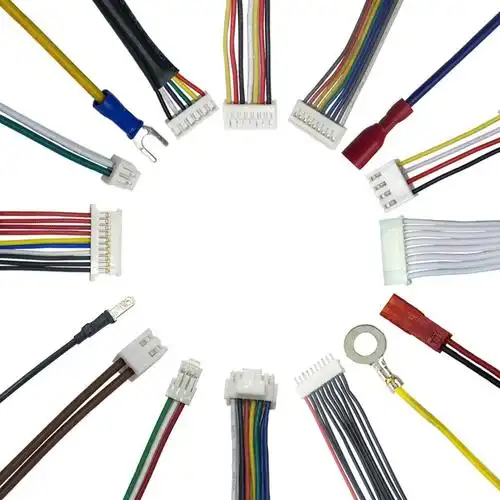
Industrial Cable Assembly Product Summary Material & Safety Utilizes premium raw materials and globally recognized components (e.g., ABB, TE Connectivity) ensuring high reliability and safety to prevent risks like fire and e.
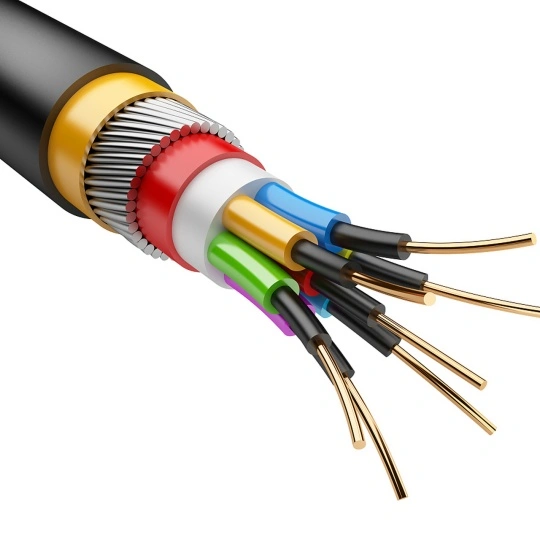
In today’s technology-driven world, maintaining uninterrupted signal integrity is critical for industrial, commercial, and residential applications. The Shielded Cable Core is engineered to deliver superior electromagnetic interference .
Feel free to reach out to us for any inquiries or orders.